
Blog
8 October 2026
Bored at the gym? Why variety changes everything
Alessio Donzella
Founder, Idra Studios
Why boredom is a structure problem, not a character flaw
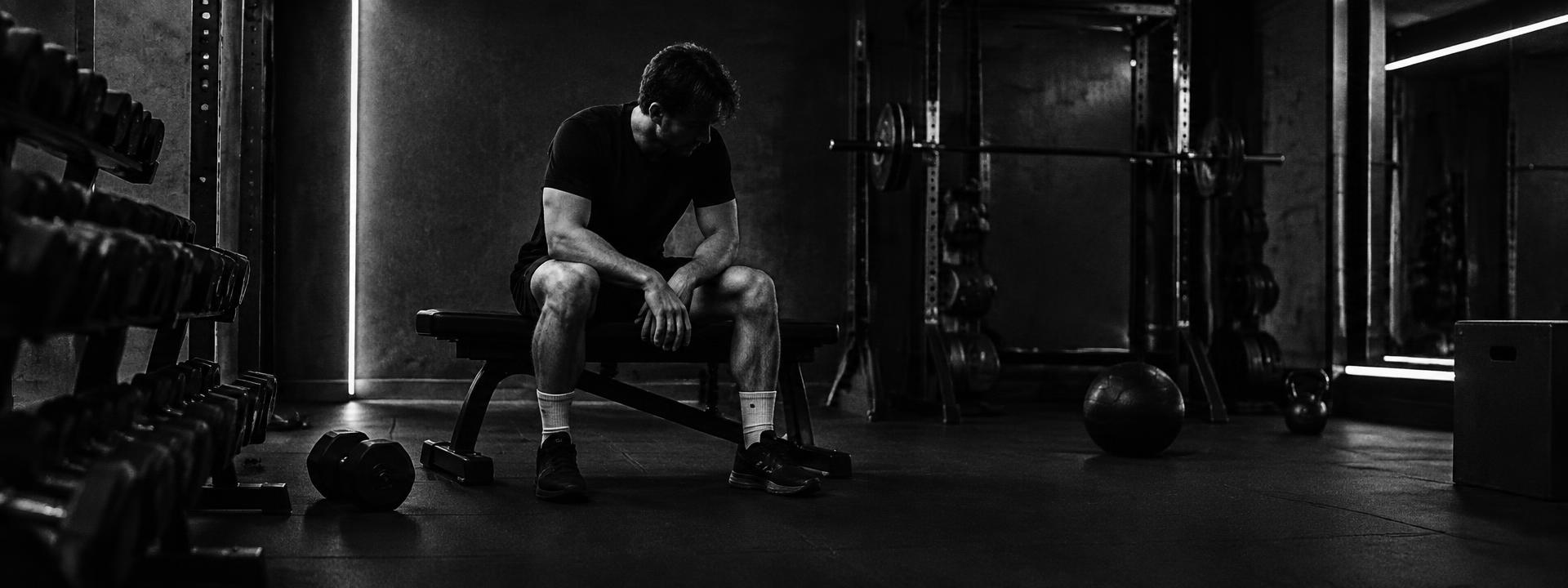
Boredom is one of the reasons a training path can be dropped, even when the first results have already arrived. It is often read as a lack of motivation, consistency or character. It is more useful, and fairer, to look at the structure: the same plan repeated for months, the same machines in the same order, and no clear direction that gives meaning to the work being done.
In a guided programme, variety is not random: it changes because the current goal changes. One cycle might focus on strength, the next on technique, another on active recovery, and then start again with a new goal. The programme evolves with the person instead of staying frozen from day one. This is a working method, and it is worth asking what the research says about it rather than taking it for granted.
What the research says about variety
A systematic review published in 2023 in the Journal of Sport & Exercise Psychology (Eather and colleagues) looked for studies that examined variety in physical activity settings. Starting from 5,576 identified articles, it judged 28 eligible, including qualitative and quantitative studies. The picture that emerges is that providing and perceiving variety is associated with participation, motivation and well-being, and that variety can increase enjoyment, interest and adherence to a programme. The authors themselves stress that more experimental studies are needed to understand how to build variety effectively.
Among the experimental studies is the one by Sylvester and colleagues (Journal of Behavioral Medicine, 2015): 121 inactive university students were randomly assigned to a six-week exercise programme with high or low variety support. Those who received more variety showed higher adherence to the programme (p = 0.02), and the link ran through perceived variety, that is, how much the person genuinely felt the programme was changing. An analysis of the same experiment, published in 2016 in Applied Psychology: Health and Well-Being, linked perceived variety to more positive emotions and vitality and to fewer negative emotions. It should be noted that for part of the analyses the final measures were completed by 55 of the 121 participants.
A brief experimental test by Juvancic-Heltzel and colleagues (Journal of Strength and Conditioning Research, 2013) points in the same direction. For twenty minutes, children (8-12 years), young adults (18-26) and adults aged 60 and over could freely choose between resistance-exercise equipment and sedentary activities, in one condition with ten pieces of equipment to choose from and in another with only two. With more choice they performed on average 126.4 repetitions versus 88.0, spent more time exercising (14.3 versus 12.1 minutes) and reported liking the session more, without a significantly different perceived effort. It is a measurement from a single session: it suggests that choice can make exercise more appealing at that moment, not that it produces long-term results.
Average repetitions with more or less equipment choice
20-minute session: 10 pieces of equipment to choose from versus 2 (children, young adults, adults aged 60 and over)
| Item | Value (rep) | Interval |
|---|---|---|
| More choice (10 pieces) | 126.4 | |
| Less choice (2 pieces) | 88 |
Mean values reported by the study (standard deviations 71.7 and 48.8). Measured in a single 20-minute session: it shows an immediate effect of choice, not a long-term result.
Source: Juvancic-Heltzel et al., Journal of Strength and Conditioning Research, 2013 · PMID 22395266 DOI 10.1519/JSC.0b013e3182518010
A recent study: more perceived well-being, effect on activity still uncertain
In 2025 a group from the University of Minnesota (Dregney, Thul, Linde and Lewis, PLOS ONE) tested variety in an eight-week randomised study. Participants were 47 low-active university students aged 18 to 25 (mean age 19.9 years, 75% women). Everyone received an individual counselling session every week. One group had 14 different HIIT workouts to do at home, with the instruction to complete at least three different ones per week; the other had a single workout, to repeat at least three times per week.
The results are nuanced, and it is only fair to report them that way. The group with more variety reported higher perceived autonomy at four weeks (p = 0.013), higher feelings of tranquility linked to the activity at eight weeks (p = 0.005) and greater confidence in their own abilities, or self-efficacy, at eight weeks (p = 0.025). For weekly moderate-to-vigorous physical activity the difference stopped at a merely marginal level (p = 0.072), as did psychological needs satisfaction at four weeks (p = 0.099). The authors speak of preliminary evidence of better psychological responses and call for caution precisely because some results are marginal.
In plain words: variety seems to help mostly with how people feel during and after training, while its effect on the amount of activity actually done is not demonstrated in this study. The sample is small, young, mostly female and followed for only eight weeks: it cannot be automatically transferred to everyone, nor does it show that variety alone guarantees consistency.
Variety with a direction: how it translates into a guided programme
This is why, in a personal training programme, the point is not to change everything all the time. Changing the equipment, the variation or the order of exercises while keeping the same movement pattern (for example a push or a pull performed in different ways) offers novelty while staying within a coherent progression. The studies cited measured adherence, enjoyment and well-being, not strength gains: whether variation slows progress or not depends on how it is programmed, and that is one of the things decided together with the person guiding you.
There is also the relationship component. In Dregney's study all participants, in both groups, received a weekly individual counselling session, and the authors conclude that practitioners should support clients' psychological needs. Understanding why you are doing an exercise, being able to choose between alternatives and talking with someone who watches your technique are all elements consistent with the autonomy and confidence measured in these studies. This is a reasonable reading of the data, not proof that having another person in the room makes people more consistent.
What the research does not say, and how to use it
None of the studies cited establishes how much variety is ideal: the comparisons were 14 workouts versus 1, or 10 pieces of equipment versus 2, not an optimal amount. The samples differ from one another, are often young and were studied for short periods, and the evidence on long-term measured participation remains limited. If you have pain or medical conditions, or are returning after a break, the first step is to talk to your doctor before changing your programme: variety should be chosen safely, not in quantity.
In short: if you are bored, it does not necessarily mean you lack motivation. A direction may be missing, or a little choice in how the work is presented, and that is something that can be addressed calmly, without promises of results.
Sources
Data and references: according to PubMed (NLM/NIH).
- Dregney TM, Thul C, Linde JA, Lewis BA. The impact of physical activity variety on physical activity participation. PLoS One. 2025. PMID 40424375 DOI 10.1371/journal.pone.0323195
- Eather N, McLachlan E, Sylvester B, Beauchamp M, Sanctuary C, Lubans D. The Provision and Experience of Variety in Physical Activity Settings: A Systematic Review of Quantitative and Qualitative Studies. Journal of Sport & Exercise Psychology. 2023. PMID 37169353 DOI 10.1123/jsep.2020-0355
- Sylvester BD, Standage M, McEwan D, et al. Variety support and exercise adherence behavior: experimental and mediating effects. Journal of Behavioral Medicine. 2015. PMID 26546241 DOI 10.1007/s10865-015-9688-4
- Sylvester BD, Lubans DR, Eather N, et al. Effects of Variety Support on Exercise-Related Well-Being. Applied Psychology: Health and Well-Being. 2016. PMID 27097736 DOI 10.1111/aphw.12069
- Juvancic-Heltzel JA, Glickman EL, Barkley JE. The effect of variety on physical activity: a cross-sectional study. Journal of Strength and Conditioning Research. 2013. PMID 22395266 DOI 10.1519/JSC.0b013e3182518010
Frequently asked questions
Keep reading
- 8 October 2026 · Alessio DonzellaWeight loss in Trento: why strength training matters more than diet aloneSame topic: Programming and results
- 8 October 2026 · Dennis MarrasHow long does it take to see the first results with a personal trainerSame topic: Programming and results
- 8 October 2026 · Dennis MarrasStrength training and anxiety: what the science actually saysSame topic: Anxiety, mood and motivation