
Blog
8 October 2026
Desk-related back pain: how personal training can help

Dennis Marras
Personal trainer
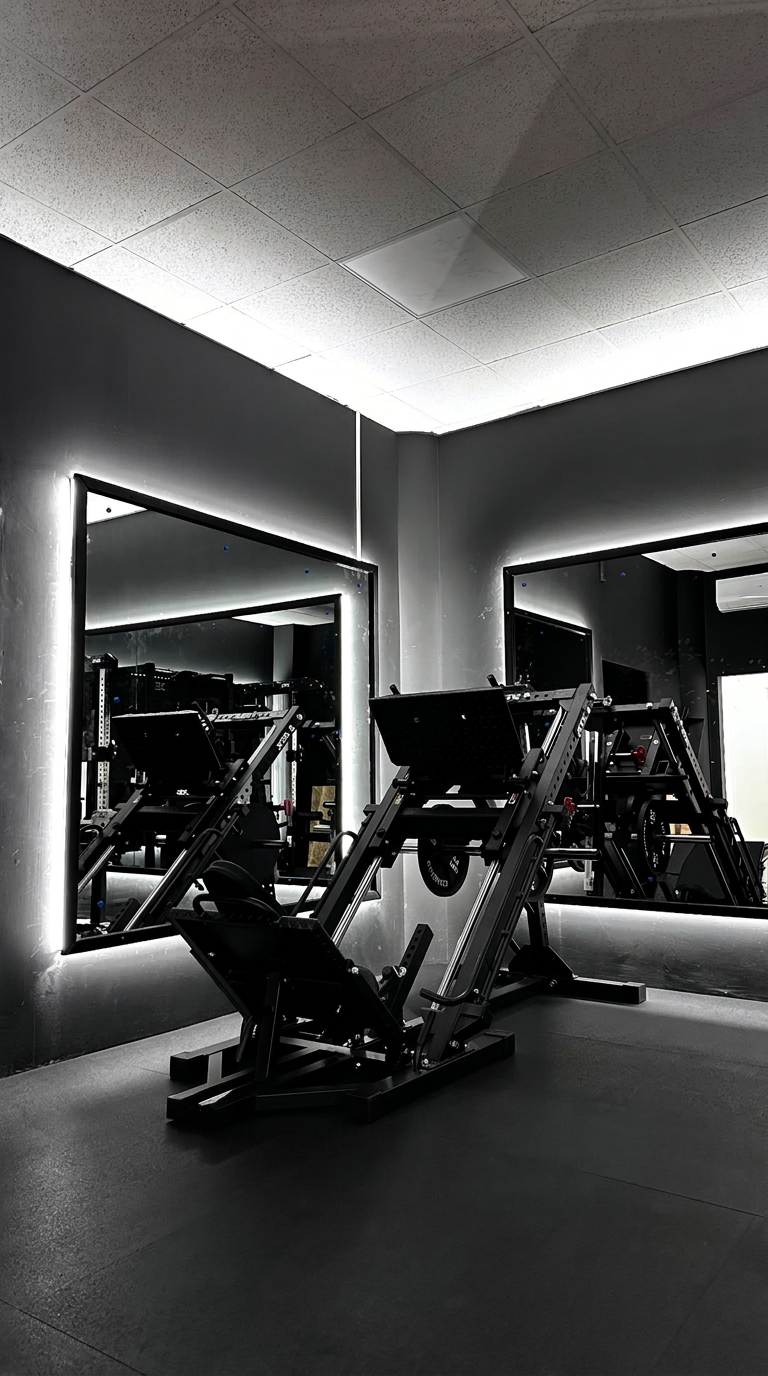
The desk matters, but it is not the only explanation
Hours at a desk, the same posture for most of the day, and sooner or later it arrives: back pain becomes a constant presence, not an isolated episode. When no precise cause can be attributed to it, it is called chronic non-specific low back pain, and this is the situation most of the studies we cite refer to. The link with sedentary behaviour exists, but it is less straightforward than it is often made out to be. A 2021 systematic review with meta-analysis (Dzakpasu and colleagues, 79 studies) found, in cross-sectional studies, an association between self-reported workplace sitting and low back pain (odds ratio 1.47; 95% confidence interval 1.12 to 1.92). The authors note, however, that reverse causality cannot be ruled out and that prospective evidence is insufficient; they also observed that intervention studies linked reducing workplace sitting with reduced pain.
What research says about training
The most useful summary for working out which training to choose is a 2019 network meta-analysis in the British Journal of Sports Medicine (Owen and colleagues), which compared different exercise modes in adults with chronic non-specific low back pain: 89 studies and 5578 patients. Compared with a no-intervention control, Pilates had the highest probability of being best for pain (standardised mean difference, SMD, of -1.86), resistance training and stabilisation/motor control for physical function (SMD of -1.14 and -1.13), and resistance and aerobic training for mental health (SMD of -1.26 and -1.18). A negative sign indicates improvement compared with control. The authors rate the quality of the evidence as low, because of heterogeneity between studies and few studies at low risk of bias, and note that exercise may be more effective than passive hands-on treatment from a therapist. So there is no absolute winner: strength is among the solid options, not the only one.
Chronic low back pain: top-ranked exercise modes by outcome
Standardised mean difference (SMD) vs control, with 95% confidence interval
| Item | Value (SMD) | Interval |
|---|---|---|
| Pain: Pilates | −1.86 | −2.54 to −1.19 |
| Function: resistance training | −1.14 | −1.71 to −0.56 |
| Function: stabilisation/motor control | −1.13 | −1.53 to −0.74 |
| Mental health: resistance training | −1.26 | −2.1 to −0.41 |
| Mental health: aerobic training | −1.18 | −2.2 to −0.15 |
Standardised effect sizes (SMD), not pain points or percentages. Negative values = improvement compared with no-intervention control. These are the modes with the highest probability of being best for each outcome, not the full list. 89 studies, 5578 patients; evidence quality rated low by the authors.
Source: Owen et al., British Journal of Sports Medicine, 2019 · PMID 31666220 DOI 10.1136/bjsports-2019-100886
Another network meta-analysis, from 2022 in the Journal of Orthopaedic & Sports Physical Therapy (Fernández-Rodríguez and colleagues), examined 118 studies with 9710 adults aged 18 to 65 with chronic low back pain. Almost every form of exercise reduced pain and disability compared with control; exceptions were stretching for pain and the McKenzie method for disability. To reduce disability the most effective programmes were Pilates, strength and core-based exercise. In practical terms, the authors point out that the most beneficial programmes included at least 1 to 2 sessions a week of Pilates or strength and sessions of under 60 minutes for core, strength and mind-body work. In other words: the best choice is often the one you can keep up over time.
Strength and psychological wellbeing: smaller studies
A 2018 meta-analysis in the Journal of Back and Musculoskeletal Rehabilitation (Wewege and colleagues) compared progressive aerobic training and progressive strength training, against usual care, in people with chronic non-specific low back pain. It included 6 studies with 333 participants (mean age 44, pain present for 7 years on average). Exercise reduced pain intensity (SMD -0.42; confidence interval -0.80 to -0.03) without either mode proving superior, and only strength training significantly improved the mental component of the SF-36 questionnaire (mean difference +5.74 points; interval 2.02 to 9.47). The sample is small and the literature search runs to March 2016: an interesting signal, not a definitive conclusion.
For people over 60, a 2023 meta-analysis in the Journal of Geriatric Physical Therapy (Syroyid Syroyid and colleagues; 21 studies, 1661 people with back pain) found a clear improvement in physical function with progressive strength training (Cohen's effect size 0.32; confidence interval 0.05 to 0.58), while the result on pain reduction was judged inconclusive (0.24; interval -0.05 to 1.10), with high heterogeneity between studies. The authors recommend interventions of at least 3 sessions a week and, at a lower level of evidence, a duration of more than 12 weeks.
Strength training in over-60s with back pain: function and pain
Cohen's effect size (d) with 95% confidence interval
| Item | Value (d di Cohen) | Interval |
|---|---|---|
| Physical function | 0.32 | 0.05 to 0.58 |
| Pain reduction (inconclusive) | 0.24 | −0.05 to 1.1 |
Standardised effect sizes (Cohen's d), not scale points. 21 studies, 1661 people over 60; high heterogeneity (I2 about 75%). For pain the confidence interval includes zero: the authors consider it inconclusive. Values as reported by the authors.
Source: Syroyid Syroyid et al., Journal of Geriatric Physical Therapy, 2023 · PMID 36805624 DOI 10.1519/JPT.0000000000000374
What this means if you work seated
Putting these studies together, the picture is this: for chronic non-specific low back pain, exercise, and strength training in particular, has a good chance of improving function and wellbeing, while the effect on pain itself is more variable. None of the studies shows that the desk is the "cause", or that a single programme works for everyone. That is why our method starts with a personal initial assessment: understanding where the stiffness comes from, which movements are limited, which load is sustainable today. From there a gradual progression is built, with correct technique from the very first session, alongside movement breaks during the working day.
When to stop and see a doctor
This article is not a substitute for a medical assessment. Acute, sudden or non-improving pain should be assessed by a healthcare professional before starting any training. A review of guidelines (Verhagen and colleagues, 2016, 16 guidelines) lists the most frequently cited "red flags" for suspecting serious pathology: major trauma, use of steroids or immunosuppressants, history of cancer, unintentional weight loss, and pain at night or at rest. The same authors stress that guidelines do not fully agree and that solid data on their accuracy are lacking. As a practical rule, also contact your doctor if the pain comes with fever, weakness in a leg that is getting worse, tingling or numbness in the groin area, or difficulty controlling bladder or bowel.
It must be said honestly that the studies have limits: evidence quality is often low, populations and protocols differ, durations are not always long. No result is guaranteed.
Sources
Data and references: according to PubMed (NLM/NIH).
- Owen PJ, Miller CT, Mundell NL, Verswijveren SJJM, Tagliaferri SD, Brisby H, Bowe SJ, Belavy DL. Which specific modes of exercise training are most effective for treating low back pain? Network meta-analysis British Journal of Sports Medicine. 2019. PMID 31666220 DOI 10.1136/bjsports-2019-100886
- Fernández-Rodríguez R, Álvarez-Bueno C, Cavero-Redondo I, et al. Best exercise options for reducing pain and disability in adults with chronic low back pain: Pilates, strength, core-based, and mind-body. A network meta-analysis Journal of Orthopaedic & Sports Physical Therapy. 2022. PMID 35722759 DOI 10.2519/jospt.2022.10671
- Wewege MA, Booth J, Parmenter BJ. Aerobic vs. resistance exercise for chronic non-specific low back pain: a systematic review and meta-analysis Journal of Back and Musculoskeletal Rehabilitation. 2018. PMID 29889056 DOI 10.3233/BMR-170920
- Syroyid Syroyid I, Cavero-Redondo I, Syroyid Syroyid B. Effects of resistance training on pain control and physical function in older adults with low back pain: a systematic review with meta-analysis Journal of Geriatric Physical Therapy. 2023. PMID 36805624 DOI 10.1519/JPT.0000000000000374
- Dzakpasu FQS, Carver A, Brakenridge CJ, et al. Musculoskeletal pain and sedentary behaviour in occupational and non-occupational settings: a systematic review with meta-analysis International Journal of Behavioral Nutrition and Physical Activity. 2021. PMID 34895248 DOI 10.1186/s12966-021-01191-y
- Verhagen AP, Downie A, Popal N, Maher C, Koes BW. Red flags presented in current low back pain guidelines: a review European Spine Journal. 2016. PMID 27376890 DOI 10.1007/s00586-016-4684-0
Frequently asked questions
Keep reading
- 8 October 2026 · Dennis MarrasPersonal training or the gym: the differences that actually matterSame topic: Health, age and pain
- 8 October 2026 · Alessio DonzellaStrength training after 50: why it matters more than you thinkSame topic: Health, age and pain
- 8 October 2026 · Dennis MarrasHow long does it take to see the first results with a personal trainerBy the same author: Dennis Marras